JAMES ORSILLO
BUILT IT. PROTECTED IT. PAID FOR THE MISTAKES
NOW HE WRITES ABOUT WHAT HE LEARNED
Mechanical Engineer · Entrepreneur · Investor · Author · Founder of Practical Asset Protection

Mechanical Engineer · Entrepreneur · Investor · Author · Founder of Practical Asset Protection
James Orsillo didn’t graduate from high school. He didn’t follow the conventional four-year path to an engineering degree, and nobody handed him a career because his résumé had the right letters after his name. He entered the working world through the trades and the United States Navy, enlisting at seventeen and learning early that in the real world, sooner or later, somebody has to actually know how to do the work.
After the military, he returned to San Diego and went back into the trades, working physical jobs in insulation and construction and eventually in the shipyards. He wasn’t starting with a degree, a professional title, or a carefully mapped career plan. He was starting with his hands, his willingness to learn, and the belief that if somebody else could understand the work, he could understand it too.
He moved up. Worker became lead man. Lead man became responsibility. Responsibility gave him a closer look at how the work was estimated, organized, sold, and managed. And somewhere along the way, James realized something that would repeat throughout his life: the person doing the work often understands far more about the business than he realizes.
So he started one.
In his twenties, Orsillo built Pro Insulation in San Diego. Later came Best Line Insulation in Oregon. He wasn’t studying entrepreneurship in a classroom. He was learning it through payroll, customers, estimates, schedules, mistakes, contracts, employees, and the uncomfortable reality that when your name is on the company, every problem eventually finds your desk.
But the trades were only the beginning.
Orsillo became increasingly interested in the technical side of the work—the drawings, machines, systems, tolerances, and engineering behind what was being built. Rather than stop because he lacked the conventional academic pedigree, he built his education around the problems directly in front of him. Technical schooling, CAD, mechanical design, manufacturing, field experience, and increasingly difficult engineering assignments became his classroom.
Eventually, the man without the engineering degree was doing the engineering work.
Mechanical engineer. Project engineer. Project manager. Inventor and patent holder. His work grew into semiconductor equipment, tester and docking-interface systems, specialized machinery, and multimillion-dollar projects where being able to solve the problem mattered considerably more than being able to explain where you went to school.
There is a straight line through all of it.
Shipyard worker to lead man. Lead man to business owner. Tradesman to engineer. Engineer to project manager.
James didn’t wait for somebody to decide he was qualified for the next step. He got close enough to the work to understand it, learned what he didn’t know, and kept moving.
The credential never became the story. Competence did.


At thirty, James Orsillo reached another one of those moments when the conventional path stopped making sense. His specialized engineering knowledge had become more valuable than the economics of remaining somebody else’s employee. So he stopped selling his ability through a W-2 paycheck and founded Systematic Inc.
This wasn’t a hobby business built on the side. Systematic grew around the kind of specialized engineering problems James had spent years learning to solve—mechanical design, automation, semiconductor equipment, tester and docking-interface systems, project engineering, and complex equipment that had to work in the real world, not merely look good on a drawing.
The assignments became larger. The customers became more sophisticated. The work expanded internationally, eventually through Systematic Asia, and James found himself on the other side of the equation. The man who had started in the trades without a high-school diploma was now the owner of the engineering company, responsible for the people, projects, contracts, intellectual property, customers, money, and risk that came with it.
But building Systematic was never simply about creating a bigger paycheck.
James understood something that would later become central to his thinking about wealth: a successful business can create money, but money isn’t independence until it can survive without the business that produced it.
So rather than allowing every successful year to become a more expensive lifestyle, he began moving the wealth created by Systematic into other assets. Commercial real estate became an increasingly important part of that strategy. Business income was being converted into property, equity, and investments capable of producing wealth outside the engineering company itself.
The transformation happened remarkably fast.
At thirty, James had started Systematic.
By roughly thirty-five, the combination of the business he had built and the assets he had accumulated had given him something he had never received from an employer: the ability to decide whether he wanted to work at all.
He stepped away from the conventional working world.
Not for six months.
Not for a year.
For approximately fifteen years.
The kid without the diploma had become the engineer. The engineer had become the entrepreneur. And the entrepreneur had converted what he built into enough financial independence to buy back the one asset he valued most:
His time.


When James Orsillo stepped away from the day-to-day engineering world at roughly thirty-five, retirement didn’t mean sitting still. It meant that for the first time, his time belonged to him. He had spent years building Systematic and then deliberately converting the wealth the company created into something that could exist without requiring him to report to work every morning: commercial real estate.
For approximately fifteen years, that decision gave James and his family a life very different from the one he had started with. They lived on a beautiful rural property in Oregon—a little private world with land, horses, animals, and room for his children to grow up. His kids attended private school. The pressure to chase the next paycheck was gone. For a man who had entered adulthood without a high-school diploma and started his working life in the trades, it was his own version of a small utopia.
But the money supporting that life wasn’t sitting passively in a savings account. It was invested. James had moved from building machines and engineering systems to owning and managing commercial real estate, and he quickly discovered that property presented an entirely different set of engineering problems.
Properties had to be found, negotiated, acquired, financed, leased, managed, protected, refinanced, and eventually sold or transferred. Escrow companies became part of normal business. So did lenders, leases, title, contracts, equity, LLCs, land trusts, trustees, mortgages, insurance, and the constant question of who should own what—and why.
James didn’t learn those structures because he planned to write about asset protection someday. He learned them because his family’s wealth was sitting inside them. A mistake was no longer an academic exercise. A badly written contract, the wrong ownership structure, an uninsured exposure, or one piece of property connected unnecessarily to another could put years of accumulated wealth on the table.
And there was enough on the table by then to take the questions seriously.
How much equity should sit exposed in a property? Should one entity own multiple assets? Where should liability live? What happens when a tenant sues? What happens when a business dispute becomes personal? How do you hold property without unnecessarily advertising everything you own? What happens when a creditor starts looking? What happens when an owner dies? And eventually, the question James had not yet understood would become the most important one of all: what happens when the threat doesn’t come from outside the structure?
Those questions changed the way he looked at wealth. Making money had been one problem. Converting it into assets had been another. Now he was confronting the third:
How do you keep one bad event from reaching everything else you’ve spent your life building?
That question would send James much deeper into attorneys, accountants, trusts, entities, contracts, ownership structures, and asset protection—and into one of the most expensive educations of his life.


Nobody puts that tuition on a brochure.
By the time James Orsillo began seriously studying asset protection, this wasn’t theoretical anymore. He had built the engineering company. He had converted business earnings into commercial real estate. He had accumulated equity, property, investments, contracts, intellectual property, and a life that had taken years to build. There was finally enough on the table that losing it was no longer an abstract possibility worth discussing someday.
So James did what successful business owners are told to do.
He hired professionals.
Attorneys. Patent attorneys. Accountants. CPAs. Insurance professionals. Estate-planning and asset-protection specialists. He established companies, trusts, ownership structures, contracts, mortgages, and other layers intended to separate risk and protect accumulated wealth.
And the education became expensive very quickly.
One sophisticated domestic trust structure alone cost him approximately $28,000 to establish and understand. That was one piece. Add the legal consultations, accounting advice, entity work, intellectual-property protection, contracts, litigation, real-estate transactions, and years of professional fees, and James learned something entrepreneurs rarely hear while they’re still busy making the money:
Understanding how to keep wealth can become almost as complicated as learning how to create it.
He wasn’t paying $28,000 for a diploma. He wasn’t trying to become an attorney. He was sitting on the other side of the desk writing the checks and trying to answer a much more practical question:
How do I keep one bad event from destroying everything I’ve spent years building?
That question followed him into real situations. James had already dealt with people challenging intellectual property he had created. He had fought over contracts when agreements weren’t honored. He had dealt with collection disputes and the realities of litigation. Lawyers weren’t theoretical professionals whose names appeared at the bottom of articles. They were people he hired when something valuable was actually at stake.
And through all of it, James kept asking the same kinds of questions owners ask when the documents become their documents and the assets become their assets.
What does this actually protect? What doesn’t it protect? Why is this entity here? Why does this trust own that? What happens if somebody gets through the first layer? And why does it cost this much just to understand what everybody is building around me?
Over time, the documents stopped looking like isolated legal products. James began seeing them the same way he had learned to see an engineered system: every component had a purpose, every connection created a consequence, and a system was only as strong as the part nobody thought would fail.
That distinction became the foundation of what he writes today.
James Orsillo isn’t the attorney explaining asset protection from the attorney’s side of the desk. He’s the owner who sat on the other side, wrote the checks, asked the questions, used the structures, tested them against real problems, and eventually learned enough to understand why they had been built the way they were.
Not being the lawyer isn’t a limitation in this story.
It’s the whole point.
Again and again, James found himself wishing somebody had handed him a plain-English field guide before there was enough money on the table to make every lesson expensive.
Eventually, he decided to write it himself.

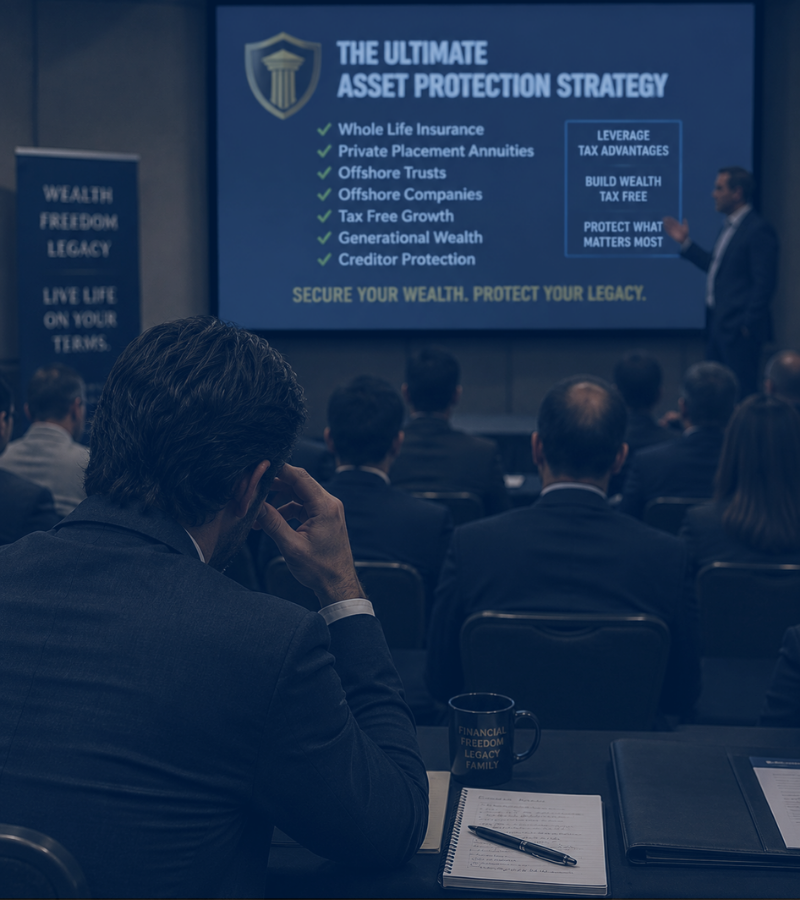
He fortified every wall he could see. The one that mattered most was the one he was standing inside of.
For James Orsillo, asset protection was never an intellectual exercise. By his mid-thirties, there was real wealth behind the walls—commercial property, business interests, intellectual property, investments, equity, contracts, and the financial independence that had allowed him to step away from conventional work.
And those walls weren’t decorative.
They were tested.
James dealt with intellectual-property disputes when others challenged what he had created. He fought contract battles when agreements weren’t honored. There were collection disputes, business litigation, attorneys, patent counsel, accountants, insurance, and substantial professional fees.
The structures did what they were supposed to do. Ownership had been separated. Commercial real estate had been structured. LLCs, trusts, trustees, mortgages, contracts, insurance, and professional advisors all had defined roles. Privacy mattered. Separation mattered. James had spent years—and a considerable amount of money—making sure one outside problem could not casually reach everything else he owned.
The fortress held.
That success created confidence. James believed he understood where the walls needed to be.
He was wrong.
The greatest vulnerability wasn’t a customer, tenant, creditor, competitor, patent dispute, or business lawsuit.
It was already inside the fortress.
When his long marriage ended, James discovered that one of the most consequential documents in his entire financial structure—the postnuptial agreement governing the financial relationship between the two people already behind the walls—was nowhere near as strong as he believed.
It became his Achilles’ heel.
The agreement was challenged. Protection he believed had been established did not hold the way he expected. Wealth that had survived years of business disputes, contractual battles, and outside exposure became vulnerable through an entirely different doorway.
The consequences were enormous.
Millions of dollars of accumulated wealth changed hands.
James remembers the judge essentially telling him that he was young enough and smart enough to build it again. His attorney—billing roughly $800 an hour—leaned over afterward and offered what was apparently supposed to be consolation:
At least you don’t have ongoing spousal support.
There wasn’t much consolation in it.
James had spent years learning how to prevent outsiders from penetrating the fortress. What he had failed to adequately understand was the legal and financial exposure created between the people who were already inside it.
That realization stayed with him.
James hadn’t grown up surrounded by significant wealth. He created it quickly, relatively young, and learned many of its rules only after there was already something substantial to protect. Looking backward, one conversation should have happened much earlier:
What does marriage actually do to everything you’re about to build?
Not because marriage is destined to fail. Not because a spouse should be treated as an enemy. But because serious asset protection requires understanding every doorway into the structure—including the uncomfortable ones nobody wants to discuss while life is going well.
Years later, that lesson would become part of the reason James wrote What My Father Never Said: the conversation about marriage, money, ownership, agreements, and protection that he wishes someone had forced him to understand before he needed it.
It also changed the way he thought about protection itself.
A fortress doesn’t have to fail everywhere.
One opening can be enough.
James had protected against risks he could identify. He had hired professionals. He had spent the money. He had built structures that survived real disputes. And he still learned that overlooking one major exposure could overwhelm years of otherwise careful planning.
That’s the lesson underneath everything that followed:
You don’t build protection because you expect life to go wrong. You build it because eventually, somewhere, life will.
The objective isn’t to eliminate every valley.
It’s to keep one valley from becoming a canyon.
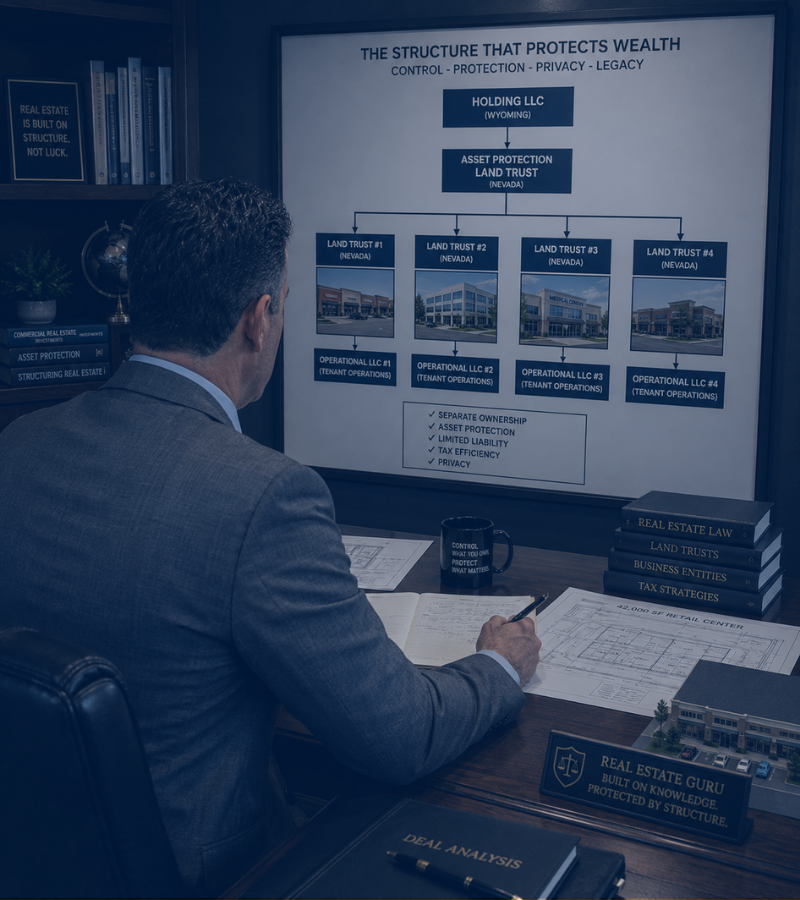


He didn’t come up with that line. He paid for it — with interest.
After everything James Orsillo built, protected, lost, and eventually rebuilt, one lesson remained remarkably simple: you cannot engineer risk out of life.
Businesses have valleys. Real estate has valleys. Markets change. Partners fall out. Contracts get broken. Lawsuits happen. Marriages sometimes end. Parents die. Children inherit. Fortunes rise and fortunes disappear. Eventually, the owner dies too.
Asset protection isn’t about pretending you can prevent those things from happening.
It’s about making sure one of them doesn’t take everything else with it.
That distinction became the philosophy behind Practical Asset Protection.
James doesn’t believe there is a magic LLC, trust, insurance policy, contract, or legal document that makes someone untouchable. He spent too many years using these structures—and too much money learning their limitations—to believe that.
What works is layers.
Separate the business from the wealth it creates. Separate valuable assets from unnecessary operating risk. Protect the property. Insure what can be insured. Put agreements in writing while everybody still gets along. Understand what your trusts actually do. Know where your equity sits. Know who owns what. And make sure the professionals advising you are looking at the same blueprint.
Most importantly, do it before you need it.
Because the purpose of asset protection isn’t to win some imaginary game against every creditor, lawsuit, market collapse, business failure, divorce, or tragedy that life can produce.
The purpose is much more practical.
When something goes wrong, you want the damage to stop somewhere.
A failed business should not automatically destroy the family wealth. A problem at one property should not unnecessarily consume an entire portfolio. One broken agreement should not decide the fate of everything else you’ve built. And one terrible chapter should not be allowed to erase the entire book.
That’s what James means by protection.
Not eliminating the valleys.
Keeping them from becoming canyons.
And that’s ultimately why Practical Asset Protection exists: to help owners understand the structures surrounding their businesses, properties, wealth, families, and legacies before life gives them an expensive reason to learn.


Everything he wishes someone had told him, before he needed it the expensive way.
Concepts and Strategies for Protecting Your Wealth covers the structures. What My Father Never Said covers the door those structures didn’t guard. Both come from the same place everything else on this page does: the owner’s side of the desk, not the attorney’s.
The Practical Asset Protection Library
Your Business Is Exposed
The Hidden Risks Every Entrepreneur Must Eliminate Before the First Lawsuit Arrives
Protect the Business
Build the Structure That Separates Risk, Protects Wealth, and Keeps More of What You’ve Earned
Protect Your Wealth
Shield Your Home, Retirement, Investments, and Personal Assets Before a Lawsuit Reaches Them
Protect Your Properties
Shield Every Property, Isolate Every Risk, and Stop One Lawsuit from Destroying Your Portfolio
Your Last Business Decision
Protect Your Family, Preserve Your Business, and Secure Your Legacy
Who Can You Trust?
Avoid Asset Protection Scams, Bad Advice, and Costly Legal Mistakes
Additional Titles
What My Father Never Said
A field manual for men navigating marriage, prenuptial agreements, and protecting everything they are building before they say I do.
The House Is Your Bank
Real estate equity, ownership structure, and protecting the wealth trapped inside property before someone else calculates how to reach it.
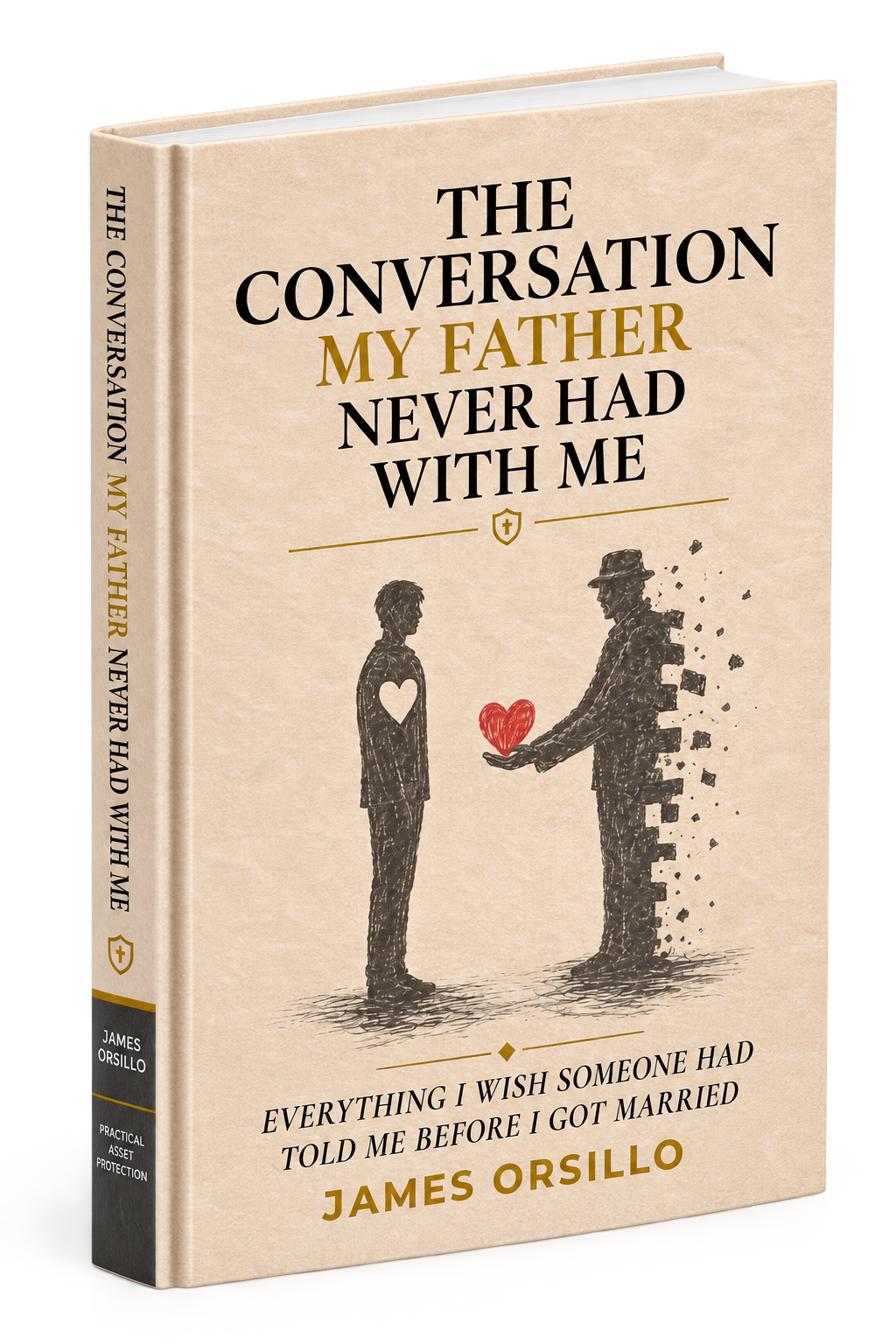
Marriage may be the biggest personal, financial, and legal decision a man ever makes. Yet most men enter it knowing almost nothing about the questions they should have asked before the ring went on.
In The Conversation My Father Never Had With Me, entrepreneur and father James Orsillo gives younger men the conversation he wishes someone had given him: direct, practical guidance about choosing wisely, recognizing warning signs, understanding money and debt, evaluating family and values, having the hard conversations, and protecting what matters before marriage changes the stakes.
CHOOSE THE PERSON
How to look beyond chemistry and ask whether character, values, money, family, children, ambition, and expectations actually align.
SEE THE WARNING SIGNS
The uncomfortable questions and relationship patterns men too often rationalize away while they’re in love.
UNDERSTAND THE CONTRACT
What marriage changes financially and legally—and why understanding those consequences before the wedding isn’t cynicism. It’s adulthood.
PROTECT WHAT MATTERS
How to think about debt, property, business interests, family wealth, future children, and marital agreements before emotion and consequences collide.
This isn’t a lawyer’s textbook or an attack on marriage. It’s one experienced father’s straight conversation with the next generation—written to help a man make a good marriage decision before he has to recover from a bad one.
Get the Book for ~ For your son. Your brother. A young man about to marry. Or yourself.