Two Ways to Protect a Home. One Decision to Make
Every homeowner’s exposure comes down to two problems: being findable, and having equity worth taking. Pick the one that matches your situation — or build both
One published price. You know the number before we touch a single document
Every document drafted by a paralegal and reviewed by licensed legal counsel
Wyoming to California. Every layer coordinated and built to hold when it matters
You pay once. No retainer. No meter running. No invoice you didn't see coming
A paid-off home isn’t the finish line — it’s a bank with the vault door standing open. Your name tells anyone where to find it. Your equity tells them what’s inside. Both are visible right now, for free, to anyone who looks. You don’t need to fix both today. You need to know which one is actually open on your property — and close it before someone else walks through first.

Your name and paid-off address are searchable right now, for free, in under two minutes. No warning, no notification—plaintiffs and predators find out after they decide you're worth suing. This permanently scrubs your public footprint. You keep every right to your property; you just stop being the easiest target on the block.

The equity above your state exemption cap is sitting in the open—visible, reachable, and already calculated by anyone deciding whether you're worth a lawsuit. This structure locks that equity down so it isn't reachable. It transforms your home from a high-stakes piggy bank into a fortress.
We don’t ask you to trust a pitch. Here is what real homeowners experienced after taking their names off public records and locking down their home equity before a predatory lawsuit or probate filing forced their hand.


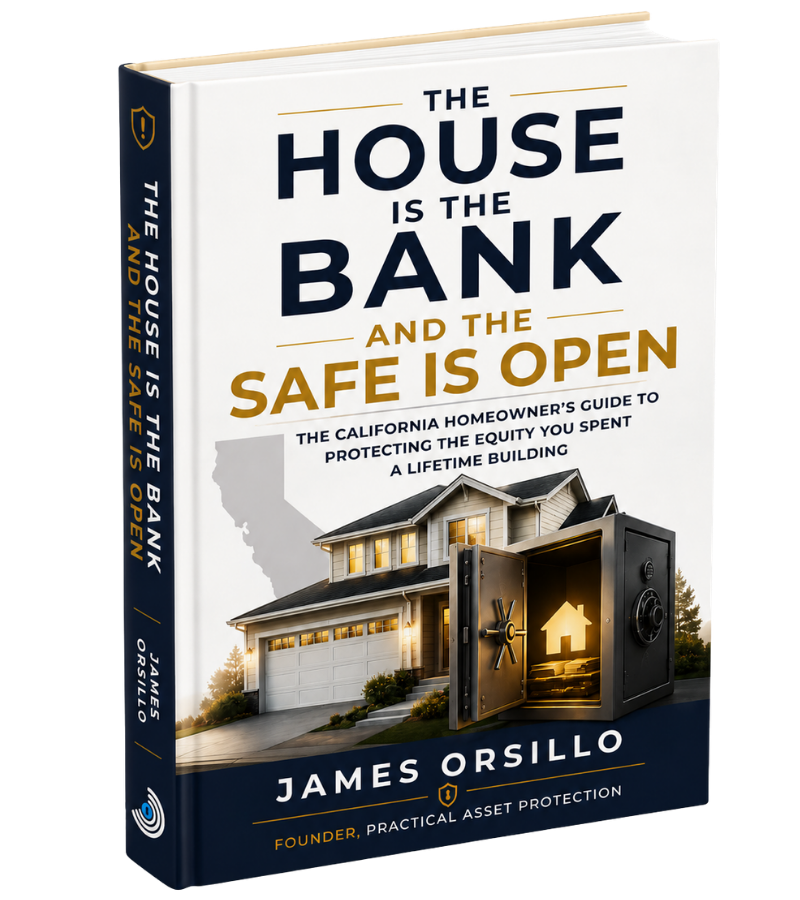
You found us. You read the book. You already know your equity is wide open and your name is floating around public records like a neon target. You’re here, and it’s time to stop gambling with everything you spent decades building. Are you going to lock the vault today—or wait until a court date, a predatory lawsuit, or a probate disaster forces your hand when it’s already too late?
Answer: No. Transferring your primary residence into a properly structured land trust or LLC for privacy and asset protection does not trigger a due-on-sale clause under federal Garn-St. Germain laws for residential property, nor does it alter your property tax status or homeowner’s exemptions. You keep full control and occupancy; you just lose the public target on your back.
Answer: You can, and that’s how most people make fatal mistakes that pierce their own protection or trigger insurance denials. True home equity and privacy architecture requires precise layering—combining nominee trustees, multi-tier entities, and defensive deeds of trust executed correctly. We handle the documentation completely through our paralegal framework at a flat fee so it’s done right the first time.
Answer: If your home is paid off, you are prime real estate for predatory lawsuits. It is never too late to put a vault door on the bank, but you must do it before a claim or a slip-and-fall incident happens. Once a plaintiff’s attorney spots open equity in public records, building a defense becomes much harder. Lock it down now while the coast is clear.
Answer: Procrastination is a luxury you only get before someone looks up your records. Once a creditor, an ex-spouse, or an attorney files a claim, putting assets into a trust or LLC is legally classified as a fraudulent conveyance—meaning a judge can unwind the whole thing overnight. You don’t buy a fire extinguisher after the house is already burning down. Protection has to be built when the coast is clear.
Answer: Nothing happens—until everything happens at once. You live your life normally until a car accident, a business dispute, or a slip-and-fall lands on your desk. Within forty-eight hours, an opposing attorney pulls up your public deed, calculates your exact home equity, and slaps a lien or a lis pendens on your property. Your home becomes the leverage they use to force a settlement. For a fraction of that cost, you can make yourself invisible and untouchable today.